How to Arrange Roses in a Small Vase (2026 Guide)
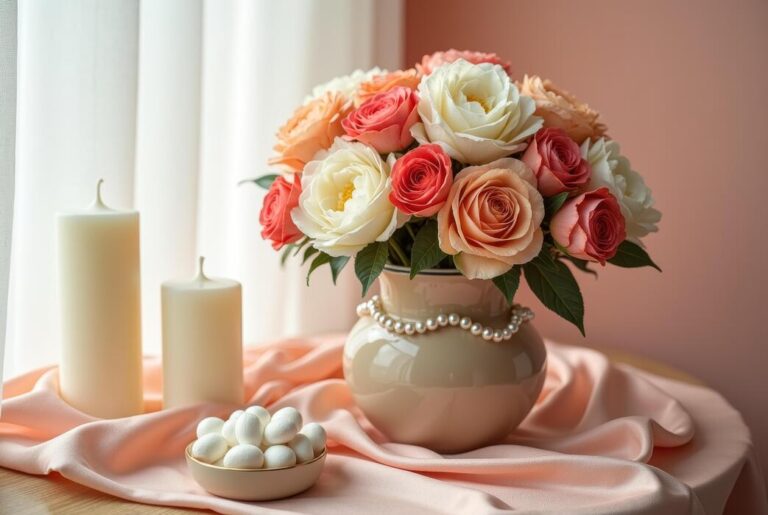
How to arrange roses in a small vase is really about keeping the design simple: trim the stems short, remove extra leaves, and place a few roses close together so they support each other. A small vase works best when the blooms sit just above the rim and form a compact, balanced shape instead of sprawling outward.
We’ve found that the best small rose arrangements start with fewer stems than most people expect. We recommend choosing roses with similar bloom stages, then rotating each stem as you place it so the flowers face different directions. In our experience, that creates a fuller look without overcrowding the vase or hiding the petals.
One detail many guides miss is the importance of stem placement at the waterline. When we angle the stems inward slightly, the roses naturally create a dome-like shape that feels polished in a tiny vase. We also recommend leaving just enough room for air between blooms, so the arrangement looks lush instead of squashed.
The most common mistake with how to arrange roses in a small vase is trying to force in too many stems. More flowers do not automatically make a better arrangement; they can bend, bruise, and block each other. A small vase usually looks more elegant with a tight cluster, a clean cut, and a little negative space around the petals.
Below, we’ll walk through the exact setup, from choosing the right vase to finishing touches that help the roses last. We’ll keep it practical and easy, so we can build a small arrangement that looks thoughtfully styled, not crowded or complicated.
In This Guide
- Trim the Stems Short and Build a Tight Rose Cluster
- Choosing the Right Small Vase for Rose Arrangements
- How to Arrange Roses in a Small Vase Without Crowding the Blooms
- Rose Stem Length, Water Level, and Vase Shape at a Glance
- A Simple Step-by-Step Setup for a Balanced Look
- Filler Greens, Buds, and Other Small Details That Make Roses Pop
- How to Keep a Small Rose Arrangement Looking Fresh Longer
Trim the Stems Short and Build a Tight Rose Cluster
For a small vase, the first move is to trim the rose stems short—usually to about 4 to 6 inches, depending on the vase height. Shorter stems give the blooms more control and help them sit closer together instead of flopping outward.
We suggest cutting each stem at a 45-degree angle with sharp shears so the roses can drink well and stay upright longer.
Once the stems are shortened, remove any leaves that would fall below the waterline. That little step matters more than most people think, because submerged foliage clouds the water and shortens vase life. In our experience, a tighter cluster looks best when the stems are all nearly the same length, with only minor variation for shaping.
That keeps the arrangement compact without looking stiff.
To build the cluster, start with three roses as your base, then add one bloom at a time around them. Rotate the vase as you work so you can see gaps from every angle.
We recommend gently crossing a few stems near the neck of the vase to create natural support; this helps the blooms stay grouped and creates that lush, gathered look small arrangements need.
Choosing the Right Small Vase for Rose Arrangements
The best small vase for roses is usually one with a narrow opening and a stable base. A tighter mouth helps guide the stems into place, which is especially useful when you only have 3 to 7 roses to work with.
We suggest looking for a vase that is roughly one-third the height of your intended arrangement so the roses can feel full without looking top-heavy.
Shape matters as much as size. A bud vase works beautifully for a single rose or two, while a small cylinder, bottle vase, or trumpet-shaped vessel can handle a few more stems with ease.
In our experience, clear glass is the most forgiving choice because you can see the stem structure and water level, but ceramic or opaque vases can look more polished if you want the flowers to be the focal point.
Pay attention to the vase mouth, not just the body. If the opening is too wide, the roses will splay apart and lose that tidy silhouette; if it is too tight, the stems can crush against each other and restrict water flow. We recommend a vase opening that allows the blooms to gently touch but not crowd.
A heavy base also helps prevent tipping when the arrangement is dense.
How to Arrange Roses in a Small Vase Without Crowding the Blooms
Start by adding water to about one-third to one-half of the vase, then place the shortest stem in the center as your anchor. From there, work outward in a loose spiral, tilting each stem slightly so the blooms open toward the viewer.
We suggest leaving a little breathing room between the petals—when roses are packed too tightly, the outer petals bruise faster and the arrangement loses its shape.
To avoid crowding, think in layers rather than a solid mound. Place a few roses a touch lower and a few slightly higher so the cluster has dimension. In our experience, odd numbers like 3, 5, or 7 tend to look more natural in a small vase, especially when paired with minimal foliage.
If you use greenery, keep it sparse so it frames the roses instead of hiding them.
As a final check, turn the vase slowly and look for any bloom that seems pushed inward or hidden behind another. We recommend adjusting the stems one at a time, not all at once, so you keep the structure intact.
If the arrangement still feels tight, remove one rose rather than forcing space; a small vase always looks better with intentional simplicity than with too many flowers competing for room.
Rose Stem Length, Water Level, and Vase Shape at a Glance
| Arrangement Factor | Best Practice | Why It Helps in a Small Vase | Quick Tip |
|---|---|---|---|
| Stem length | Trim stems to about 1.5–2 times the vase height | Keeps blooms proportionate and prevents top-heavy droop | Cut a little at a time; you can always shorten more |
| Water level | Fill vase about 1/2 to 2/3 full | Supports stems without crowding the blooms | Keep leaves above the waterline to reduce cloudiness |
| Vase shape | Choose a narrow-necked or slightly tapered vase | Helps roses stand upright and look fuller with fewer stems | A wide mouth works best only if you plan to use a support grid |
| Rose count | Use 3, 5, or 7 stems for a small vase | Odd numbers create a more natural, balanced look | Start with fewer blooms and add only if the vase still feels airy |
When we arrange roses in a small vase, proportion matters more than volume. A good rule is to keep the stems long enough to give height, but not so long that the flowers outgrow the container. In practice, that usually means trimming stems to 1.5–2 times the vase height, which helps the bouquet feel intentional instead of crowded or awkward.
Water level is just as important as stem length. We recommend filling the vase about halfway to two-thirds full, especially if the vase is short and narrow. That gives the stems enough support while leaving room for the blooms to open naturally. Removing any leaves below the waterline also keeps the arrangement fresher and helps the water stay clear longer.
Shape matters because it controls how the roses sit. A slightly tapered or narrow-necked vase makes it easier to create a tidy, upright silhouette, while a wide opening can cause stems to flop outward.
In our experience, fewer stems often look better in a small vessel, especially when you use odd numbers like 3, 5, or 7 for a more relaxed, balanced composition.
A Simple Step-by-Step Setup for a Balanced Look
Start by choosing roses that are similar in size, but not identical. Slight variation gives the arrangement a more natural feel. Trim each stem under running water or in a bowl of clean water, cutting at a 45-degree angle so the roses can drink efficiently.
We suggest removing thorns and any foliage that would sit below the waterline before placing the first stem in the vase.
Next, create your structure before thinking about fullness. Put one rose in the center as your anchor, then add the remaining stems around it in a loose triangle or small cluster. If the vase is especially narrow, rotate the vase instead of forcing the stems into position.
That way, the blooms face slightly different directions and the arrangement feels full without looking packed.
Finish by stepping back and checking the silhouette from all sides. We like to make small adjustments by lifting one stem a half inch higher or lowering another so the bloom line looks even. If one rose opens more than the others, place it slightly off-center to keep the design balanced.
A final top-off of fresh water helps the bouquet settle and hold its shape through the day.
Filler Greens, Buds, and Other Small Details That Make Roses Pop
Even in a small vase, a little texture goes a long way. We recommend adding just a few stems of filler greenery, such as eucalyptus, salal, or soft fern, to frame the roses without stealing attention. The goal is to create contrast, not volume.
Keep the greens low and airy so the blooms remain the focal point and the arrangement still feels light.
Rose buds are another useful detail because they extend the life and movement of the arrangement. Mixing one or two tighter buds with more open blooms adds depth and makes the vase look fuller without adding clutter.
In our experience, placing a bud slightly lower than the main blooms creates a subtle diagonal line that draws the eye upward and makes the whole design feel more dynamic.
Small finishing touches matter more than people expect. We suggest checking for torn petals, bruised edges, or overly open outer petals and removing only the damaged parts, not healthy ones. A clean vase, crisp water, and a subtle green accent can make roses appear brighter and more luxurious.
When everything is edited down carefully, the roses themselves look richer and more refined.
How to Keep a Small Rose Arrangement Looking Fresh Longer
To keep a small rose arrangement looking fresh, we recommend starting with the basics: a clean vase, cool water, and freshly trimmed stems. Roses drink best when the stems are cut at a 45-degree angle under running water or in a bowl of water, which helps reduce air bubbles.
In our experience, removing any leaves that would sit below the waterline is just as important, since decaying foliage shortens vase life quickly.
Water care makes a noticeable difference, especially in a small vase where conditions change fast. We suggest changing the water every 1 to 2 days and rinsing the vase each time to prevent bacteria buildup. A flower food packet helps, but if you don’t have one, a clean vase and fresh water are still essential.
Keep the arrangement away from direct sunlight, heaters, and ripening fruit, all of which can speed up wilting.
For a small rose bouquet, timing matters too. If a bloom starts to droop, we found that a quick recut of the stem and a fresh water change can revive it before it collapses. Remove any petals that look bruised, and rotate the vase daily so every side gets even light and air circulation.
With a little maintenance, a compact rose arrangement can stay crisp and beautiful for 5 to 7 days, sometimes longer.
Frequently Asked Questions
How do we arrange roses in a small vase?
We recommend starting with a clean vase, fresh water, and stems cut at an angle. Remove any leaves that would sit below the waterline, then place the largest rose in the center and build around it with smaller blooms. In a small vase, fewer stems usually look better.
We’ve found that turning the vase as we place each stem helps create a balanced, rounded shape.
How many roses should we put in a small vase?
For most small vases, 3 to 7 roses works well, depending on the vase opening. A narrow-neck vase may only need 3 or 4 stems, while a slightly wider one can hold more. We suggest avoiding overcrowding, because too many roses can crush each other and lose their shape.
It’s better to use a few well-placed stems than to pack the vase full.
How do we keep roses fresh longer in a vase?
We keep roses fresher by trimming the stems every few days, changing the water regularly, and removing any fading petals. Adding flower food can help, but clean water matters most. We also recommend placing the vase away from direct sunlight, heaters, and ripening fruit.
In our experience, cool conditions and fresh cuts make a noticeable difference in how long roses last.
Should we remove the thorns and leaves from rose stems?
Yes, we should remove any leaves below the waterline because they can rot and cloud the water. Thorns are optional to remove, but taking off the lower ones can make arranging easier and protect the vase from scratches. We usually leave thorns higher on the stem if they don’t interfere with placement.
A cleaner stem also helps the arrangement look more polished in a small vase.
How do we make a small rose arrangement look fuller?
We make a small arrangement look fuller by varying the height of the stems and spacing the blooms so they open outward. Using baby’s breath, greenery, or a few shorter filler flowers can add volume without crowding the vase. We’ve found that cutting stems to different lengths creates dimension and keeps the bouquet from looking flat.
A tight, compact shape often looks best in a small vase.
Final Thoughts
Arranging roses in a small vase is really about keeping things simple, balanced, and fresh. We’ve found that a few carefully trimmed stems, clean water, and a thoughtful shape can create a beautiful result without much effort. When the vase is small, every stem matters, so placement and proportion make the biggest difference.
A modest arrangement can still feel elegant and complete.
If the first try feels uneven, we recommend adjusting the stem lengths and rotating the vase until it looks right from every angle. Small rose arrangements are easy to refine, and that’s part of the charm. With a little practice, we can create something graceful and personal in just a few minutes.

Chloe Bennett is an interior stylist and ceramic enthusiast with a passion for curation. She specializes in finding the perfect vases to elevate home spaces, blending contemporary design with vintage aesthetics. Her expert guides help readers select, style, and care for unique vessels that transform ordinary rooms into art.